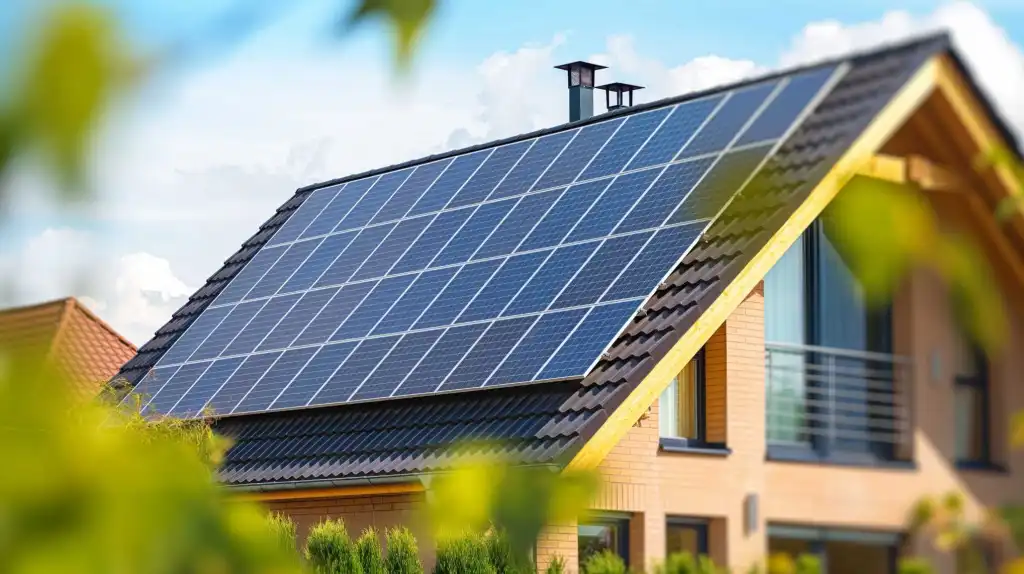

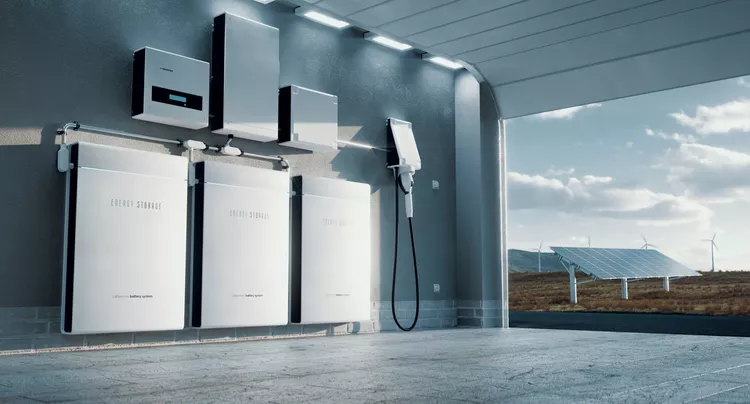
A solar battery storage system captures the excess electricity your solar panels generate during the day and saves it for later — at night, during a power outage, or whenever your panels aren’t producing enough. Instead of sending that surplus energy back to the grid for a small credit, you keep it on-site and use it when electricity rates are highest or the grid goes down.
That’s the short answer. Below, we break down exactly how these systems work, what they cost in 2026, how the leading batteries stack up against each other, and whether adding storage actually makes financial sense for your home.
Quick Summary
| Takeaway | Detail |
|---|---|
| What it does | Stores excess solar energy in a battery instead of sending it to the grid |
| Typical home size | 10–15 kWh usable capacity covers most nightly household needs |
| Average cost (2026) | $9,000–$18,000 installed, before incentives |
| Payback period | 6–12 years, depending on utility rates and incentives |
| Best for | Homes with time-of-use rates, frequent outages, or no net metering |
How Solar Battery Storage Works
The basic energy flow
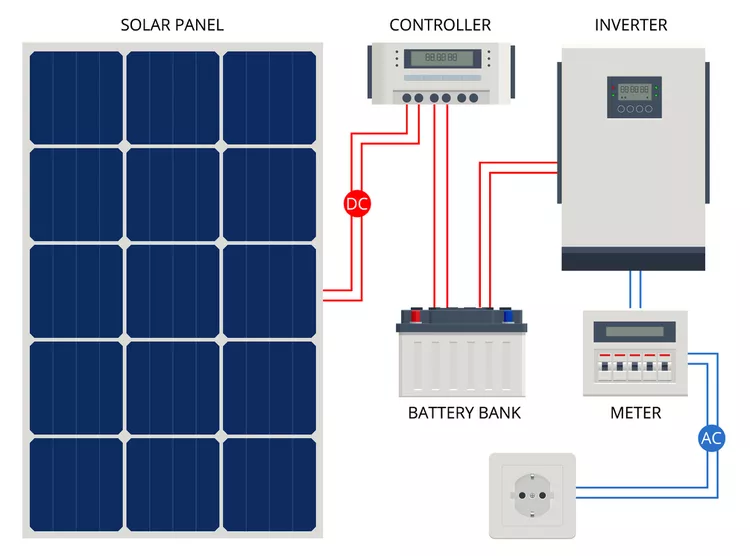
Solar panels generate direct current (DC) electricity whenever sunlight hits them. In a battery-equipped system, that power follows one of three paths:
- Straight to your home to power appliances in real time
- Into the battery if production exceeds household demand
- Back to the grid only after the battery is full (in systems that still use net metering)
At night or during cloudy periods, the flow reverses — your home draws from the battery first, and only pulls from the grid once the battery is depleted.
Key components
- Inverter — converts DC power from panels/battery into AC power your home uses. Some batteries include a built-in hybrid inverter; others require a separate one.
- Battery management system (BMS) — regulates charging/discharging to protect battery health and prevent overcharging.
- Automatic transfer switch — for battery systems with backup capability, this isolates your home from the grid during an outage so power can flow safely from the battery.
AC-coupled vs. DC-coupled systems
- DC-coupled: Battery connects directly to the solar array before the inverter. Slightly more efficient (fewer conversion losses) but usually requires installing at the same time as your solar panels.
- AC-coupled: Battery connects after the inverter, via your home’s AC circuit. Easier to retrofit onto an existing solar system, though marginally less efficient.
If you already have solar panels installed, AC-coupled is almost always the practical choice.
Types of Solar Batteries
Lithium iron phosphate (LFP/LiFePO4)
The dominant chemistry in residential storage as of 2026. LFP batteries offer a strong safety profile, long cycle life (often 6,000+ cycles), and stable performance across a wide temperature range. Nearly every major brand — Tesla, Enphase, FranklinWH — has shifted to this chemistry.
NMC (Nickel Manganese Cobalt)
Slightly higher energy density than LFP, meaning more capacity in a smaller footprint. Less common now in home storage due to higher cost and marginally lower thermal stability, though still used in some compact systems.
Lead-acid
Largely legacy technology at this point. Cheaper upfront but shorter lifespan (500–1,000 cycles) and lower depth of discharge. Mostly seen in off-grid or budget backup setups rather than modern whole-home storage.
What Determines Battery Size for Your Home
Sizing depends on three factors:
1. Daily energy usage
Check your utility bill for average kWh/day. A typical U.S. household uses roughly 29 kWh/day, though this varies widely by climate and home size.
2. Backup goals
- Partial backup (fridge, WiFi, essential circuits): 5–10 kWh
- Whole-home backup (most circuits, several hours to a day): 10–20 kWh
- Extended outage resilience (multi-day, off-grid-like): 20–40 kWh, often with multiple battery units stacked
3. Solar array size
A battery is only as useful as the solar production feeding it. Oversized batteries paired with undersized arrays take longer to recharge after a discharge cycle, especially during winter months with shorter daylight hours.
Solar Battery Storage Costs in 2026
Installed costs (equipment + labor, before incentives) generally break down like this:
- Small system (5–7 kWh): $7,000–$10,000
- Mid-size system (10–13 kWh): $10,000–$15,000
- Large system (16–20 kWh): $15,000–$20,000+
Costs vary by region, installer, and whether the battery is added to an existing solar array or installed alongside new panels (bundled installs are typically cheaper per kWh).
Incentives that reduce net cost
- Federal tax credit: Standalone battery storage of 3 kWh or more qualifies for the same federal residential clean energy credit as solar panels in most cases — check current-year eligibility, as credit terms have shifted in recent legislation.
- State and utility rebates: Vary significantly by state; some utilities offer rebates specifically for batteries enrolled in demand-response programs.
- Time-of-use arbitrage: In regions with high peak-rate pricing, batteries can offset costs faster by charging during off-peak hours and discharging during expensive peak windows.
Is Solar Battery Storage Worth It?
Storage makes the strongest financial case when:
- Your utility has time-of-use rates with a big gap between peak and off-peak pricing
- Your area has weak or no net metering, so excess solar exported to the grid earns little or no credit
- You experience frequent grid outages and value resilience alongside savings
- You want to maximize self-consumption of solar you’ve already paid to generate
Storage is a weaker financial case when:
- Your utility offers full retail-rate net metering (exporting to the grid is already nearly as good as storing)
- Grid outages in your area are rare
- Your budget is tight and solar panels alone would already cut your bill significantly
Solar Battery Comparison: Top Options in 2026
| Battery | Usable Capacity | Round-Trip Efficiency | Warranty | Approx. Installed Cost |
|---|---|---|---|---|
| Tesla Powerwall 3 | 13.5 kWh | ~97.5% | 10 years / 70% retention | $11,000–$16,000 |
| Enphase IQ Battery 5P | 5 kWh (stackable) | ~89% | 10 years / 70% retention | $9,000–$13,000 per unit |
| FranklinWH aPower 2 | 13.6 kWh | ~93–96% | 10 years | $10,000–$15,000 |
| Generac PWRcell | 9–18 kWh (modular) | ~93% | 10 years | $12,000–$18,000 |
| SolArk / LG-based systems | 9.8–14.4 kWh (varies) | ~92–95% | 10 years | $10,000–$17,000 |
Specs and pricing are approximate and vary by installer, region, and configuration — always get a site-specific quote before comparing final numbers.
Common Questions
How long do solar batteries last?
Most modern lithium batteries are warrantied for 10 years or a set number of charge cycles (often 6,000–10,000), with manufacturers typically guaranteeing at least 70% of original capacity at the end of that period.
Can I add a battery to an existing solar system?
Yes — this is one of the most common installs today, generally done as an AC-coupled retrofit without needing to replace your existing panels or inverter.
Do solar batteries work during a power outage?
Only if the system includes an automatic transfer switch and is configured for backup power. Grid-tied solar without this feature typically shuts off during outages for safety, even with a battery installed.
Bottom Line
Solar battery storage is worth it if you face time-of-use electricity rates, limited net metering, or frequent outages — in those cases, a mid-size 10–15 kWh system typically pays for itself within 6–10 years while adding real backup resilience. If your utility still offers generous net metering and outages aren’t a concern, panels alone may deliver better returns for now, with storage as a future add-on once battery prices continue their downward trend.