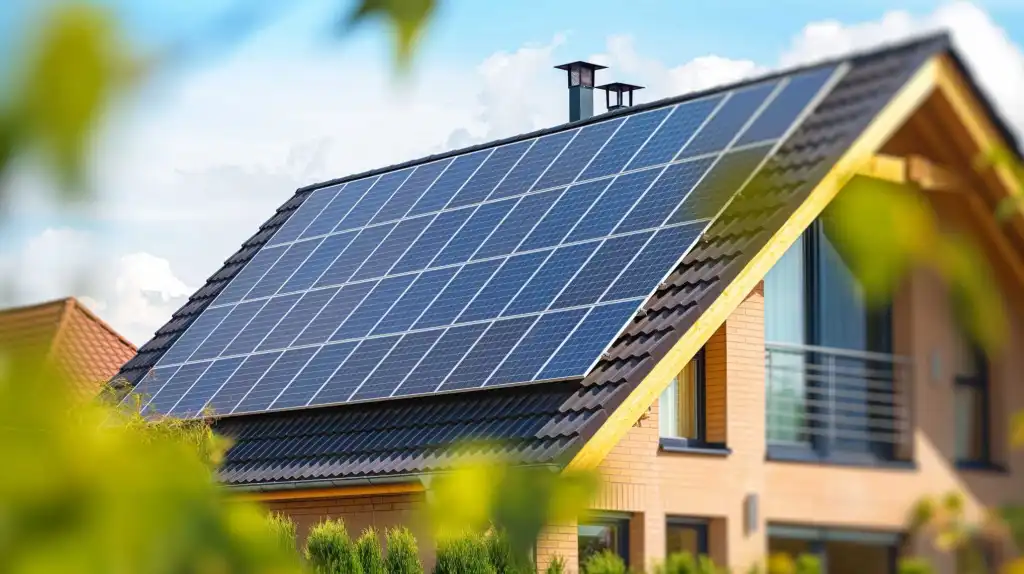

Yes — solar panels keep producing electricity on cloudy days, typically generating 10% to 25% of their rated output, because panels convert both direct and diffuse sunlight into power. On overcast days, indirect (diffuse) light still reaches the panel’s cells, it’s just far less intense than direct sun. Light rain and haze barely dent output; thick, dark storm clouds cut it the most. Below, we break down exactly how much power you lose, which panel types hold up best, and how to size a system that still pencils out in a cloudy climate.
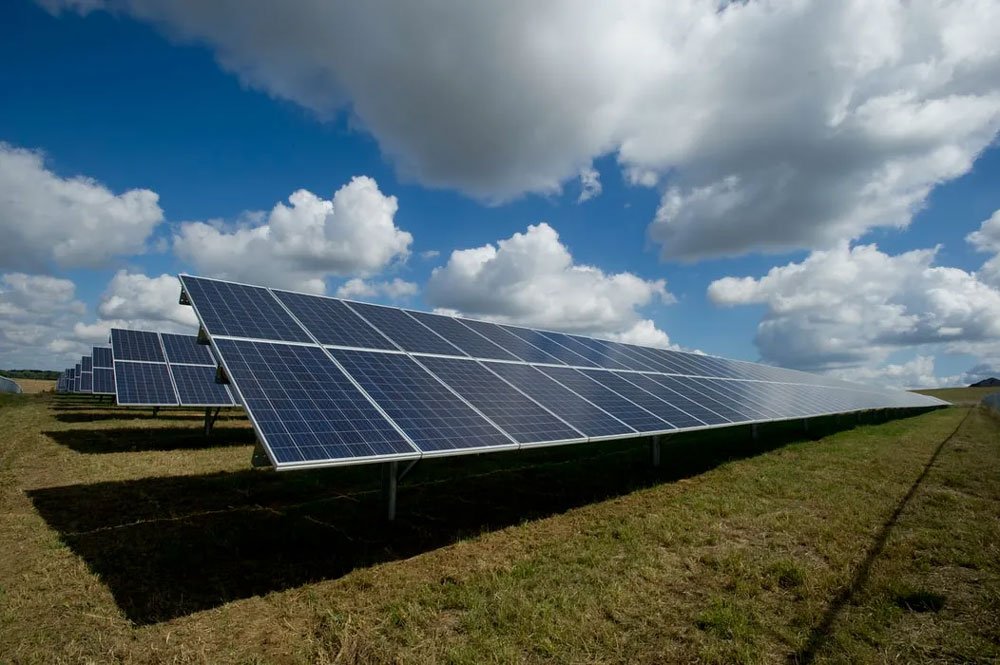
Quick Summary
| Takeaway | Detail |
|---|---|
| ☁️ Cloudy-day output | 10–25% of a panel’s rated (peak sun) capacity |
| 🌧️ Light rain/haze | Output drops only 10–20% — rain also cleans the panels |
| ⛈️ Heavy/dark storm clouds | Output can fall to 5–10% of peak |
| 🔬 Best tech for low light | Monocrystalline (PERC/N-type) panels outperform polycrystalline in diffuse light |
| 📐 System sizing fix | Cloudy-climate homeowners typically oversize arrays by 15–25% to hit the same annual output |
How Solar Panels Actually Generate Power in Clouds
Solar panels don’t need direct sunlight to work — they need photons. Photovoltaic (PV) cells absorb both:
- Direct irradiance — sunlight traveling straight from the sun to the panel (dominant on clear days)
- Diffuse irradiance — sunlight scattered by clouds, atmosphere, and particles, which arrives from all directions
On a clear day, direct irradiance makes up roughly 85–90% of total sunlight hitting a panel. On an overcast day, that ratio flips: diffuse irradiance becomes the primary — sometimes the only — light source. Panels still convert it, just less efficiently, because diffuse light carries lower overall energy density (measured in watts per square meter, or W/m²).
The Numbers: Peak Sun vs. Cloudy Sky
Under a clear sky, solar irradiance at ground level averages about 1,000 W/m² — the benchmark used to rate panels (“Standard Test Conditions”). Under cloud cover, that figure drops sharply depending on cloud density:
- Light clouds / high haze: 300–600 W/m² (30–60% of peak)
- Moderate overcast: 100–300 W/m² (10–30% of peak)
- Heavy, dark storm clouds: 50–100 W/m² (5–10% of peak)
Because panel output scales roughly with irradiance, a 400W panel rated at 1,000 W/m² might produce only 40–100W under moderate overcast skies — still enough to keep charging a battery or offsetting daytime household load, just at a fraction of its rated capacity.
What Actually Hurts Solar Output (and What Doesn’t)
Rain
Rain itself barely reduces output beyond the cloud cover that typically accompanies it, and it offers a bonus: it rinses dust, pollen, and debris off the panel surface, which can modestly improve efficiency for days afterward. Studies on panel soiling have found dust and grime alone can cut output by 5–15% between cleanings, so rain is partially self-correcting.
Fog and Haze
Fog scatters light heavily and can cut output more than a moderate cloud layer, sometimes to 10–20% of peak, because water droplets in the air block and diffuse light in a way similar to thin cloud cover.
Snow Cover (Not Snowy Weather)
Falling snow behaves like heavy cloud cover — output drops. But snow sitting on the panel surface is the real killer, since it can block sunlight entirely until it melts or slides off. Cold, sunny days after a snowfall often produce excellent output once panels are clear, partly because cold temperatures improve PV cell efficiency.
Temperature (a Cloudy-Day Advantage)
Here’s a lesser-known fact: solar panels lose roughly 0.3–0.5% efficiency per °C above 25°C (77°F). Cloudy days are often cooler, which partially offsets the light-loss penalty — one reason cloudy-day output isn’t as bad as irradiance numbers alone would suggest.
Which Panel Types Perform Best on Cloudy Days
Not all panels handle diffuse, low-intensity light equally well.
Monocrystalline (Mono PERC / N-Type)
Monocrystalline panels use a single continuous silicon crystal, giving them the highest efficiency ratings (21–23%+) and the best low-light performance of mainstream panel types. Newer N-type TOPCon and heterojunction (HJT) cells extend this advantage further, maintaining a higher percentage of rated output as irradiance drops.
Polycrystalline
Polycrystalline panels (multiple silicon fragments melted together) are cheaper but typically run 15–17% efficiency and fall off faster in diffuse light. For a cloudy climate, the efficiency gap widens compared to sunny regions where raw peak output matters more than low-light behavior.
Thin-Film (CdTe / Amorphous Silicon)
Thin-film panels have a genuine edge in very low light and high-heat conditions and perform better in diffuse light relative to their (lower) rated capacity. Their major drawback is efficiency — around 10–13% — meaning you need significantly more roof area for the same output.
Bifacial Panels
Bifacial panels capture reflected/diffuse light on their rear surface as well as the front, which can add a measurable output boost on overcast days when ambient scattered light is more uniform, especially over light-colored roofing or ground surfaces.
How to Size a Solar System for a Cloudy Climate
Homeowners in low-sun regions (the Pacific Northwest, parts of the Midwest, the UK, Northern Europe) shouldn’t use a single “peak sun hours” number pulled from a sunny-state case study. Instead:
- Use local historical irradiance data. Tools like NREL’s PVWatts or a local utility’s solar calculator factor in regional cloud cover averages, not just latitude.
- Oversize the array by 15–25%. This compensates for lower average daily output without needing more inverters in most string-inverter setups.
- Prioritize efficiency over sticker price. In cloudy climates, a higher-efficiency mono panel often produces more annual kWh per dollar than a cheaper polycrystalline panel with more nameplate wattage but weaker low-light behavior.
- Pair with battery storage. A battery buffers the day-to-day swings between sunny and overcast days, smoothing out the “how much am I actually getting today” problem.
- Check inverter clipping ratios. With variable irradiance, a slightly oversized DC array relative to inverter capacity captures more usable low-light energy without wasting production on sunny peak days.
Panel Type Comparison for Low-Light and Cloudy Conditions
| Panel Type | Typical Efficiency | Low-Light Performance | Relative Cost | Best Fit |
|---|---|---|---|---|
| Monocrystalline (PERC/N-Type) | 21–23%+ | Excellent | $$$ | Cloudy climates, limited roof space |
| Polycrystalline | 15–17% | Fair | $$ | Sunny climates, budget installs |
| Thin-Film (CdTe) | 10–13% | Good (per watt) | $ | Large flat roofs, extreme heat areas |
| Bifacial Mono | 21–24%+ | Very Good (rear-side gain) | $$$$ | Ground mounts, reflective surfaces |
Bottom Line
Solar panels absolutely work on cloudy days — they just produce roughly a quarter of their rated output instead of near-zero, since diffuse sunlight still reaches and activates the cells. If you live somewhere with frequent overcast weather, don’t chase the cheapest per-watt panel; buy the most efficient monocrystalline or bifacial panel your budget allows, oversize the array by 15–25%, and pair it with battery storage to smooth out the swings. Do that, and cloudy skies become a manageable variable, not a dealbreaker.