
Monocrystalline panels cost more but deliver higher efficiency (20–23%) and last longer (25–30 years), while polycrystalline panels are cheaper upfront (15–17% efficiency, 20–25 year lifespan) but need more roof space for the same output. If your roof space is limited or you want the best long-term return per square foot, monocrystalline is the stronger pick. If you have ample space and want to lower your upfront cost, polycrystalline still gets the job done.
That’s the short answer. Below, we break down exactly how these two panel types are made, how they perform side by side in real-world conditions, what each one costs per watt, and which one makes sense depending on your roof, budget, and climate.
Quick Summary Box
| Factor | Monocrystalline | Polycrystalline |
|---|---|---|
| Efficiency | 20–23% | 15–17% |
| Cost per watt | $0.90–$1.50 | $0.70–$1.00 |
| Lifespan | 25–30 years | 20–25 years |
| Space needed (per kW) | ~55–65 sq ft | ~75–90 sq ft |
| Best for | Limited roof space, long-term value | Larger roofs, tighter budgets |
Prices and specs vary by manufacturer, region, and market conditions — figures above are representative industry ranges, not quotes for a specific product.
What Is a Monocrystalline Solar Panel?
Monocrystalline panels are made from a single, continuous silicon crystal. Manufacturers grow this crystal using the Czochralski process, then slice it into thin wafers. Because the silicon structure is uniform, electrons move through it with less resistance, which is the main reason monocrystalline cells convert sunlight to electricity more efficiently than their polycrystalline counterparts.
Recognizing Monocrystalline Panels
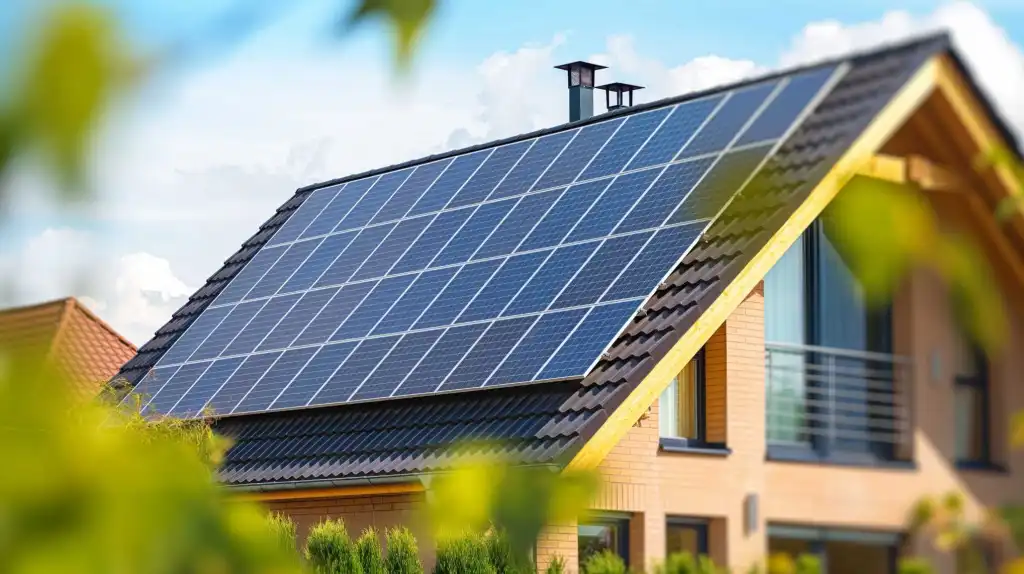
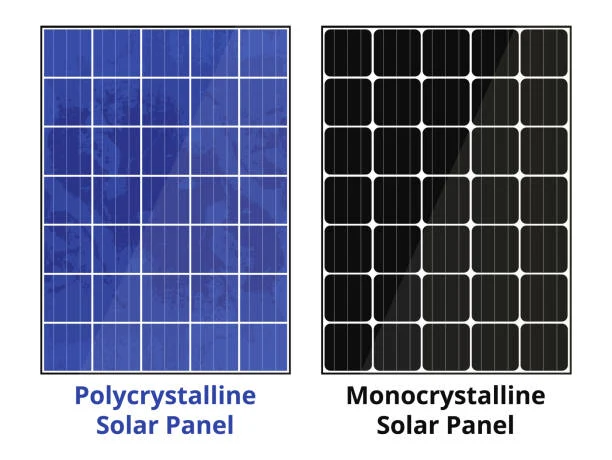
Monocrystalline cells are cut into rounded-edge squares (an artifact of the cylindrical crystal ingot), giving the panel a distinctive dark black, almost uniform appearance. This is often the fastest way to visually identify them on a roof.
Manufacturing Cost Driver
The single-crystal growing process is energy- and time-intensive, which is the primary reason monocrystalline panels carry a higher price tag per watt compared to polycrystalline panels.
What Is a Polycrystalline Solar Panel?
Polycrystalline (also called “multicrystalline”) panels are made by melting multiple silicon fragments together and pouring them into a square mold. This process is faster and produces less waste than growing a single crystal, which keeps manufacturing costs lower.
Recognizing Polycrystalline Panels
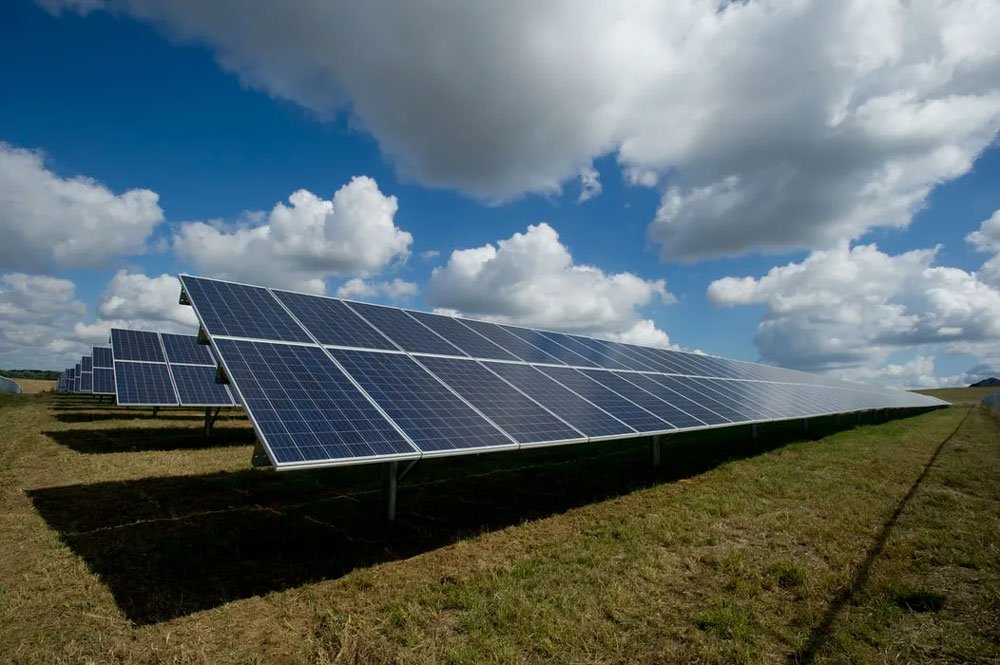
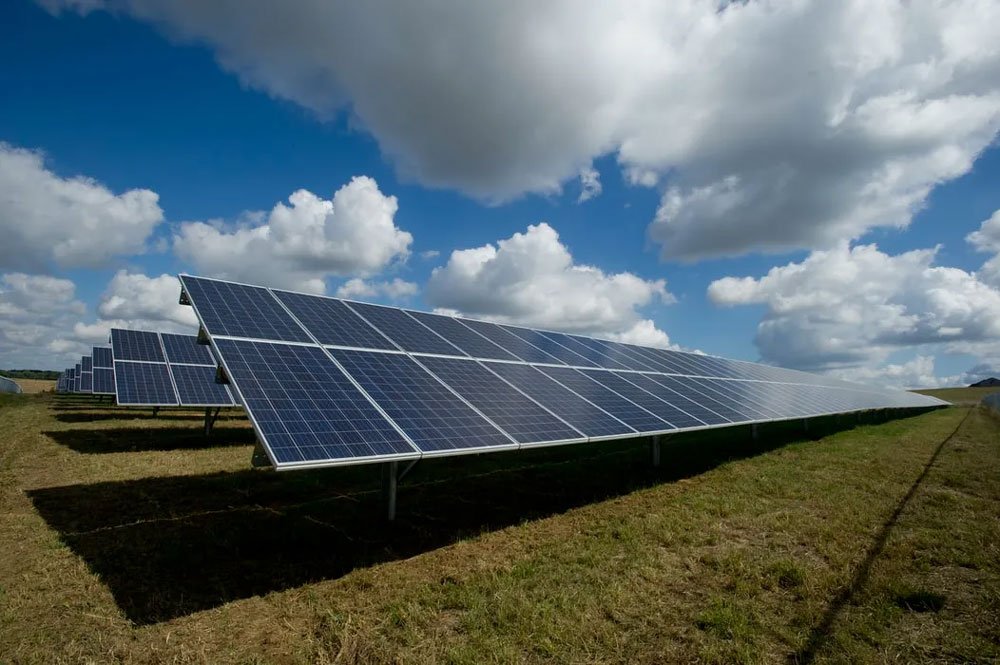
Because the cells contain multiple silicon crystals fused together, light refracts differently across the surface, giving polycrystalline panels a characteristic blue, speckled appearance with visible crystal fragments.
The Efficiency Trade-off
The multiple crystal boundaries in polycrystalline silicon create more resistance to electron flow than a single uniform crystal does. This is the core reason polycrystalline panels convert less sunlight into usable electricity per square foot than monocrystalline panels.
Efficiency Comparison
Efficiency measures how much of the sunlight hitting a panel gets converted into usable electricity.
- Monocrystalline: 20–23% efficiency, with some premium panels from top-tier manufacturers pushing past 22.5%.
- Polycrystalline: 15–17% efficiency, largely unchanged over the past several years as manufacturers have shifted R&D investment toward monocrystalline and newer cell technologies.
In practical terms, a 400W monocrystalline panel and a 400W polycrystalline panel produce the same power output — but the polycrystalline panel needs a larger physical surface area to reach that wattage, because it converts a smaller percentage of the sunlight hitting it.
Why This Gap Persists
Most of the solar industry’s efficiency research and capital investment over the last decade has gone into monocrystalline and monocrystalline-derived technologies (PERC, TOPCon, HJT). Polycrystalline manufacturing has stayed comparatively static, which is why the efficiency gap has not closed — and has arguably widened as monocrystalline continues to improve.
Cost Comparison
Polycrystalline panels are typically 15–25% cheaper per watt than monocrystalline panels, mainly because the manufacturing process uses less energy and generates less silicon waste.
However, the lower per-watt price doesn’t always translate to a lower total system cost. Because polycrystalline panels are less efficient, a system sized to meet the same energy target requires more panels, more mounting hardware, and more roof area — all of which add installation labor and materials cost. For homeowners with abundant, unshaded roof space, this trade-off often works out fine. For those with limited space, the added hardware and labor can offset — or even erase — the per-watt savings.
A Note on Pricing Volatility
Solar panel pricing has fluctuated significantly due to global silicon supply, tariffs, and shipping costs. The per-watt figures above reflect general industry ranges rather than fixed prices — always get a current, itemized quote from installers in your area before budgeting a project.
Durability and Lifespan
Both panel types are built to withstand decades of outdoor exposure, but monocrystalline panels generally hold a durability edge.
- Monocrystalline: 25–30 year expected lifespan, with most manufacturers offering 25-year performance warranties guaranteeing at least 80–87% of original output at the end of that period.
- Polycrystalline: 20–25 year expected lifespan, with performance warranties typically in the 80–85% range at 25 years.
The difference comes down to silicon purity. The single-crystal structure in monocrystalline cells degrades more slowly under thermal cycling and UV exposure than the multi-crystal structure in polycrystalline cells.
Temperature Performance
Both panel types lose efficiency as temperatures rise, a property measured by the “temperature coefficient.” Monocrystalline panels generally have a slightly better (less negative) temperature coefficient — typically around -0.35% to -0.40% per °C, compared to -0.40% to -0.45% per °C for polycrystalline. In hot climates, this modest difference compounds over the panel’s lifetime into a meaningful gap in annual output.
Aesthetics and Space Requirements
For homeowners in areas with strict HOA rules or a preference for a uniform look, monocrystalline’s solid black appearance is generally considered the more visually appealing option compared to polycrystalline’s blue, speckled surface.
Space is often the deciding factor in practice. Because monocrystalline panels produce more watts per square foot, they’re the practical choice for:
- Smaller roofs
- Roofs with partial shading or complex angles
- Homeowners trying to maximize output from a fixed, limited area
Polycrystalline panels remain a reasonable option when:
- Roof space is not a constraint
- Budget is the primary decision driver
- The installation is a large, open area (barns, ground-mount arrays, commercial rooftops)
Which One Should You Choose?
Choose Monocrystalline If:
- Your roof space is limited and you need to maximize output per panel
- You’re in a hot climate where temperature coefficient matters over 25+ years
- You want the longer warranty and slower degradation curve
- Upfront cost is less important than long-term production and resale value
Choose Polycrystalline If:
- You have a large, unshaded roof or ground-mount area
- Minimizing upfront system cost is the top priority
- You’re installing in a moderate climate where the efficiency gap matters less
- Aesthetics are not a major concern
Comparison Table: Monocrystalline vs Polycrystalline Solar Panels
| Specification | Monocrystalline | Polycrystalline |
|---|---|---|
| Silicon structure | Single crystal | Multiple fused crystals |
| Efficiency range | 20–23% | 15–17% |
| Cost per watt (USD) | $0.90–$1.50 | $0.70–$1.00 |
| Space needed per kW | ~55–65 sq ft | ~75–90 sq ft |
| Lifespan | 25–30 years | 20–25 years |
| Temperature coefficient | -0.35% to -0.40%/°C | -0.40% to -0.45%/°C |
| Appearance | Solid black | Blue, speckled |
| Best roof type | Small / limited space | Large / open space |
| Warranty (typical) | 25 years, 80–87% output | 25 years, 80–85% output |
Figures are representative industry ranges as of 2026 and vary by manufacturer and region.
Bottom Line
Monocrystalline is the better long-term investment for most residential installations, particularly on smaller roofs or in hot climates, because higher efficiency and slower degradation outweigh the higher upfront cost over a 25-year system life. Polycrystalline still makes sense if you have generous roof space and want to minimize day-one spending, but it’s increasingly a niche choice as monocrystalline prices continue to fall. When space isn’t a constraint and budget is tight, polycrystalline remains a reasonable, lower-cost path to solar — just expect to install more panels to hit the same output.
This article covers general specifications and industry averages. Actual panel performance varies by manufacturer, installation angle, shading, and local climate — request a site-specific quote before making a purchasing decision.