

Most homes need between 17 and 21 solar panels to cover their electricity use, but the real number depends on your monthly kWh usage, your roof’s sun exposure, and the wattage of the panels you choose. A typical U.S. household using about 900 kWh per month needs roughly a 6–8 kW system, which usually works out to 18–24 standard 350–400W panels.
That’s the short answer. But panel count isn’t a fixed formula — a home in Phoenix and a home in Seattle with identical electricity bills won’t need the same number of panels, because sunlight hours, roof angle, and shading change the math significantly. Below, we break down exactly how to calculate your own number, compare panel wattages side by side, and show what real systems look like at different usage levels.
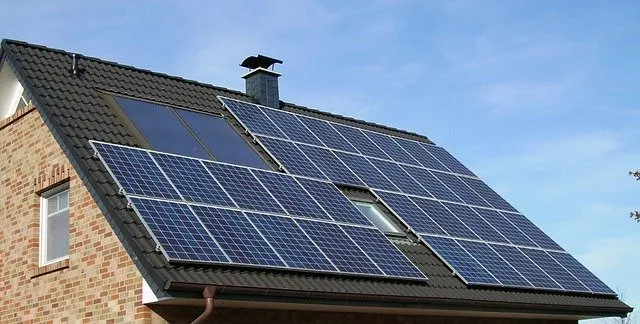
Quick Summary
| Takeaway | Detail |
|---|---|
| Average home needs | 17–21 panels (based on 900 kWh/month usage) |
| System size range | 6 kW to 8 kW for most single-family homes |
| Key formula | (Monthly kWh ÷ Peak Sun Hours ÷ 30) ÷ Panel Wattage × 1,000 |
| Biggest variable | Peak sun hours in your region, not just your bill |
| Panel wattage matters | Higher-wattage panels (430W+) need fewer units for the same output |
How to Calculate Your Panel Count
The number of panels you need comes down to three inputs: how much electricity you use, how much usable sunlight your roof gets, and how powerful each panel is.
Step 1: Find Your Average Monthly Usage
Check your last 12 months of electric bills and calculate your average kWh usage per month. The U.S. average sits around 900 kWh, but this varies widely — a small apartment might use 400 kWh, while a large home with central AC and an EV charger can exceed 1,800 kWh.
Step 2: Check Your Region’s Peak Sun Hours
Peak sun hours measure how many hours of strong, direct sunlight your area gets per day on average — not total daylight hours. This is the number most people skip, and it’s the reason two identical houses in different states need different panel counts.
- Sunbelt states (Arizona, Nevada, New Mexico): 6–7 peak sun hours/day
- Mid-range states (Texas, Georgia, California): 5–6 peak sun hours/day
- Northern/cloudier states (Washington, Ohio, New York): 3–4 peak sun hours/day
Step 3: Apply the Formula
Use this formula to estimate your system size in watts:
System Size (kW) = Monthly kWh ÷ 30 ÷ Peak Sun Hours
Then divide your system size by your chosen panel’s wattage to get panel count:
Panel Count = (System Size in Watts) ÷ (Panel Wattage)
Example: A home using 900 kWh/month in a region with 5 peak sun hours needs a 6 kW system (900 ÷ 30 ÷ 5 = 6). With 400W panels, that’s 6,000 ÷ 400 = 15 panels. With 350W panels, it climbs to 17 panels.
Panel Count by Usage Level
Here’s how panel count shifts as monthly usage increases, assuming 5 average peak sun hours and 400W panels.
| Monthly Usage | System Size Needed | Panels (400W) | Panels (350W) |
|---|---|---|---|
| 500 kWh | 3.3 kW | 8–9 | 10 |
| 900 kWh | 6 kW | 15 | 17 |
| 1,200 kWh | 8 kW | 20 | 23 |
| 1,800 kWh | 12 kW | 30 | 34 |
Homes with pools, EV charging, or electric heating typically fall in the 1,200–1,800 kWh range, which is why “how many panels do I need” doesn’t have a single universal answer.
Why Panel Wattage Changes the Count
Not all solar panels produce the same output, even at the same physical size. Panel wattage — typically ranging from 300W to 450W+ for residential installs — determines how much of your target system size each individual panel contributes.
Standard Panels (300–350W)
Older or budget-tier panels, still common in some installer catalogs. They require more panels to reach a given system size, which means more roof space and more mounting hardware.
Mid-Range Panels (350–400W)
The current market standard for most residential installs in 2026. Balanced between cost per panel and space efficiency.
High-Efficiency Panels (400–450W+)
Premium panels, often using monocrystalline PERC or newer N-type cell technology. Fewer panels needed for the same output — useful if your roof space is limited or partially shaded.
Roof Space and Shading Considerations
Panel count on paper doesn’t always match panel count in practice. A roof with dormers, chimneys, or partial tree shading may not physically fit the number of panels your usage calls for, which pushes homeowners toward higher-wattage panels or battery storage to make up the gap.
As a rule of thumb, each standard residential panel needs about 18–20 square feet of unshaded roof space, including spacing for mounting hardware and code-required setbacks.
Should You Round Up or Down?
Most solar installers recommend sizing systems to cover 100–110% of current usage, not exactly 100%. This accounts for:
- Panel degradation (roughly 0.5% output loss per year)
- Future usage increases (EV purchase, home addition, electrification of heating)
- Inverter and system losses (typically 10–15%)
Sizing exactly to your current bill often means falling short within 3–5 years.
Bottom Line
Most homes need 15–23 panels, but the only way to know your real number is to run your actual monthly kWh usage against your region’s peak sun hours and your chosen panel’s wattage — not a generic average. If your roof space is tight, higher-wattage panels let you hit your energy target with fewer units; if space isn’t a constraint, standard-wattage panels are usually the more cost-effective route. When in doubt, size for 105–110% of current usage rather than exactly matching today’s bill.