
There is no single “best” solar panel brand — there’s a best brand for your roof, climate, and budget. In 2026, Aiko and Jinko lead on raw efficiency (up to 25.9%), REC and Panasonic lead on hot-climate durability, Qcells and Canadian Solar lead on value, and Maxeon still leads on warranty length — though its financial troubles this year mean that 40-year promise needs a closer look before you rely on it. Below, we break down specs, pricing, and warranties side by side so you can match a brand to your situation in minutes, then dig into the details behind each pick.
Quick Summary: What You Need to Know
- Highest efficiency: Jinko Tiger Neo 5.0 (25.9%) and Aiko NEOSTAR 3P54 (25.0%) lead the market with back-contact and hybrid cell technology.
- Best for hot climates: REC Alpha Pure-RX (HJT) has a low -0.24%/°C temperature coefficient, meaning it loses less output as panel temperatures climb.
- Best value / mainstream pick: N-type TOPCon panels from Qcells, Canadian Solar, Trina, and Jinko now install for roughly $2.50–$2.85/watt, versus $3.50–$4.20/watt for premium back-contact brands.
- Warranty caution: Maxeon still advertises a 40-year warranty, but the company entered judicial management and was delisted from Nasdaq in May 2026 — confirm who backs that warranty before you buy.
- Industry-wide shift: P-type PERC cells, once 60% of global production, now make up under 5% of the market. N-type (TOPCon, HJT, back-contact) is the 2026 standard.
| Category | Top Pick |
|---|---|
| Efficiency | Jinko Tiger Neo 5.0 — 25.9% |
| Temperature performance | REC Alpha Pure-RX — -0.24%/°C |
| Value | Canadian Solar / Qcells TOPCon |
| Warranty (on paper) | Maxeon 7 — 40 years |
| Hail/impact resistance | LONGi Hi-MO 5 Ice-Shield |
Why Panel Technology Matters More Than the Brand Name
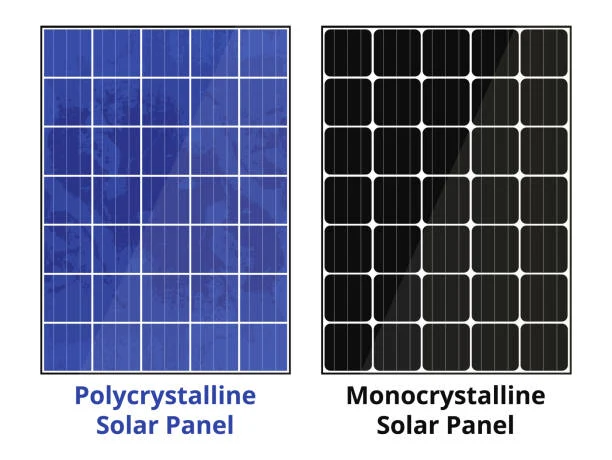
Before comparing logos, it helps to know what’s actually changed inside the panel. The solar industry has gone through its biggest shift since monocrystalline replaced polycrystalline cells: n-type silicon has almost entirely replaced p-type PERC.
TOPCon: The Mainstream Workhorse
TOPCon (Tunnel Oxide Passivated Contact) is now the default technology for Qcells, Canadian Solar, Jinko, Trina, and Risen. It typically reaches 22–23.8% efficiency at a manufacturing cost low enough to keep installed prices around $2.50–$2.85 per watt. For most homeowners without extreme roof-space constraints, TOPCon is the practical sweet spot.
HJT: The Hot-Climate Specialist
Heterojunction (HJT) technology, used by REC and Panasonic, blends crystalline silicon with a thin amorphous silicon layer. It reaches 22.2–22.6% efficiency but wins on temperature performance — its low temperature coefficient means it holds output better on scorching rooftops where panel surfaces can hit 70°C (158°F) in summer. A slightly lower efficiency panel with strong heat tolerance can outproduce a higher-rated panel that degrades faster in the heat.
Back-Contact (ABC/IBC): The Efficiency Leaders
Back-contact cells move all wiring to the rear of the panel, eliminating front-side shading losses. Aiko’s ABC architecture and newer entrants like Jinko’s Tiger Neo 5.0 and Recom’s Black Tiger series now push past 25% efficiency — a number that was purely theoretical just a few years ago. This is the technology to shortlist if roof space is tight and you need maximum output per square foot.
Brand-by-Brand Breakdown
Aiko Solar
Aiko has held the top efficiency spot for three years running with its NEOSTAR 3P54 series, now at 25.0% module efficiency using All Back Contact (ABC) cells. Near-gapless cell spacing and a refined rear-contact layout give it an edge in light absorption. Its upcoming Z Series is also expected to offer a 40-year product and performance warranty — worth watching for buyers who want Maxeon-level coverage from a more financially stable manufacturer.
Jinko Solar
Jinko’s Tiger Neo 5.0 opened a new efficiency tier at 25.9%, currently the highest rated panel on the market. Jinko also ships high-volume TOPCon panels for buyers who want strong performance without paying flagship pricing.
REC Group
The REC Alpha Pure-R and Pure-RX use HJT cells to hit 22.1–22.6% efficiency with class-leading temperature coefficients (as low as -0.24%/°C) and degradation as slow as 0.25% per year. REC carries a 100/100 EnergySage brand score and a strong installer reputation, though its U.S. installer network is thinner in the Midwest and Mountain West, and lead times can stretch to 8–10 weeks in peak season.
LONGi Solar
LONGi rates well for all-climate durability. Its Hi-MO 5 Ice-Shield line is tested to withstand hail up to 65mm in diameter — more than double the size most panels are rated for — making it a strong choice in hail-prone regions. Its newer Hi-MO X10 Explorer reaches 24.3% efficiency.
Maxeon
Maxeon 7 still leads on paper with 24.0–24.1% efficiency and an unmatched 40-year warranty. But Maxeon entered judicial management and was delisted from Nasdaq in May 2026, so that warranty is only as reliable as whatever entity emerges from restructuring. If you’re considering Maxeon, confirm the warranty backstop with your installer before signing.
Qcells, Canadian Solar & Trina Solar
These three anchor the mainstream TOPCon tier. Canadian Solar’s TOPHiKu7 and Trina’s Vertex S+ (475W, 23.8% efficiency) deliver near-premium performance at $2.50–$2.85/watt installed, making them the go-to pick for buyers who want strong output without back-contact pricing.
Solar Panel Brands Comparison Table
| Brand / Model | Cell Technology | Efficiency | Temp. Coefficient | Warranty | Installed Price/Watt | Best For |
|---|---|---|---|---|---|---|
| Jinko Tiger Neo 5.0 | Back-contact | 25.9% | Not disclosed | Standard 25-yr | Premium tier | Max output, small roofs |
| Aiko NEOSTAR 3P54 | ABC back-contact | 25.0% | Low | 25-yr (Z Series: 40-yr, pending) | Premium tier | High efficiency + curb appeal |
| Maxeon 7 | IBC back-contact | 24.0–24.1% | Low | 40-yr (backer uncertain) | $3.50–$4.20 | Long-term buyers who verify backing |
| LONGi Hi-MO X10 Explorer | Back-contact/TOPCon hybrid | 24.3% | Moderate | 25-yr | Mid-premium | Hail/storm-prone regions |
| Trina Vertex S+ | N-type TOPCon | 23.8% | Moderate | 25-yr | $2.50–$2.85 | Value with near-premium output |
| REC Alpha Pure-RX | HJT | 22.1% | -0.24%/°C | 25-yr | ~$0.50–$0.80 below Maxeon | Hot climates |
| Qcells / Canadian Solar TOPCon | N-type TOPCon | 22.0–22.5% | Moderate | 25-yr | $2.50–$2.85 | Most homeowners |
Pricing reflects installed cost per watt, not wholesale module price, and varies by installer and region.
Bottom Line
If you have unlimited roof space and a normal climate, mainstream N-type TOPCon panels from Qcells, Canadian Solar, or Trina give you 90% of the performance of premium brands at 30–40% less cost — that’s the right call for most homeowners. If your roof is small or you live somewhere brutally hot, pay up for Aiko, Jinko’s back-contact line, or REC’s HJT panels instead. Skip Maxeon until its warranty backing is clarified, no matter how good the 40-year number looks on paper.